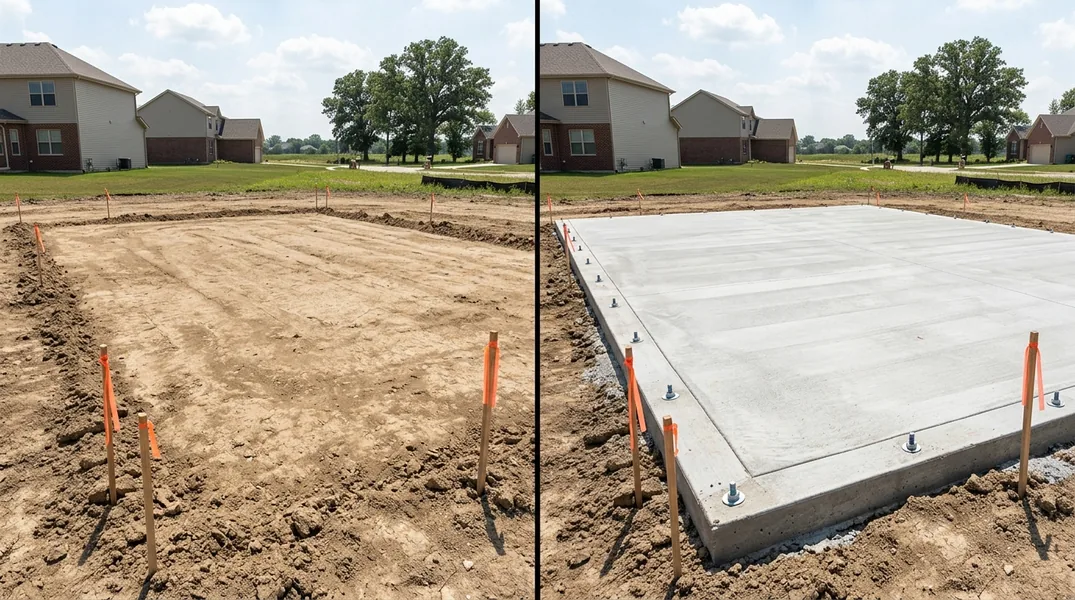
Understanding New Construction Concrete Slabs in Joliet
Buying a new home in Joliet is exciting, but it comes with serious responsibilities. One of the most critical components of any new construction home is the concrete foundation slab. This is literally what your entire house sits on, yet many homebuyers overlook it during the closing process. A concrete slab that isn't properly installed, graded, or cured can lead to foundation settling, cracking, water intrusion, and costly repairs down the road.
The foundation slab is more than just a flat surface. It must be engineered to handle the weight of your home, resist moisture from the soil below, and accommodate the climate conditions specific to Will County. Illinois winters bring freeze-thaw cycles that can stress concrete, while spring rains test the drainage systems around your foundation. Understanding what builders are supposed to do, and what you should verify before signing closing papers, protects your investment and gives you peace of mind.
What to Look for During a Builder Foundation Inspection
A thorough builder foundation inspection should happen before you close on your new home. This isn't a casual walk-through; it's a detailed examination of the concrete slab and surrounding systems. Start by looking at the slab surface itself. Walk across the entire basement or crawlspace and feel for soft spots, movement, or unusual settling. Use a straightedge or a long level to check for high spots and low spots. Some minor variation is normal, but anything more than a quarter-inch over ten feet suggests a problem that needs professional evaluation.
Examine the perimeter of the slab where it meets the foundation wall. Look for gaps, cracks, or separation. Check the grading around the exterior of the home to ensure water slopes away from the foundation, not toward it. Inspect any cracks in the slab itself. Hairline cracks (less than one-eighth inch wide) are often cosmetic, but wider cracks or cracks that run diagonally across the slab may indicate structural issues. Ask your builder for documentation of the concrete mix design, the date of installation, curing time, and any soil testing that was performed before the slab was poured. Reputable builders will have this information readily available.
New Home Foundation Warranty: What Joliet Homebuyers Need to Know
Most builders offer a new home foundation warranty, but the terms vary significantly. In Illinois, builders are typically required to provide a one-year structural warranty that covers major defects in workmanship and materials. However, some builders offer extended warranties that last five, ten, or even longer. Before you close, get a copy of the warranty in writing and read it carefully. Understand what is covered and what is excluded. Many warranties do not cover minor cracks, settling that occurs naturally over time, or damage caused by poor maintenance or external factors like tree roots or soil movement.
Ask your builder specifically what happens if foundation issues appear after closing. Will they repair it at no cost? Will you need to submit a claim? Is there a deductible? Some warranties require you to notify the builder within a specific timeframe, often 30 to 60 days of discovery. Missing this deadline could void your coverage. Also ask whether the warranty is transferable if you sell the home in the future. A transferable warranty adds value to your property and gives future buyers confidence in the foundation's integrity. If the builder's warranty seems vague or limited, consider hiring a third-party structural engineer to inspect the slab before closing and provide an independent assessment.
Common New Construction Concrete Slab Defects in Will County
Will County's climate and soil conditions create specific challenges for concrete slabs. The area experiences significant seasonal temperature swings, and the soil composition varies widely depending on your exact location. Some common defects that appear in new construction slabs include improper slope or grading that traps water against the foundation, inadequate vapor barriers that allow moisture to migrate into the slab, and insufficient reinforcement that leads to cracking under load. Premature cracking often occurs when concrete is poured in hot weather without proper curing procedures, or when the concrete mix is not appropriate for local conditions.
Another frequent issue is poor drainage around the perimeter of the slab. If gutters, downspouts, and grading don't direct water away from the foundation, water will accumulate and eventually seep through cracks or the slab-to-wall joint. This can lead to basement moisture, mold, and structural damage. Some builders cut corners by using a concrete mix with too much water, which weakens the final product. Others fail to properly compact the soil beneath the slab, leading to uneven settling. If you notice any of these issues during your inspection, document them with photos and written notes. Request that the builder address them before closing, or negotiate a credit toward repairs if they're discovered after you take ownership.
Hiring a Professional for a Pre-Closing Slab Assessment
While you can perform a basic visual inspection yourself, hiring a professional structural engineer or foundation specialist before closing is one of the smartest investments you can make. These experts have the tools and experience to identify problems that untrained eyes miss. They can use moisture meters to detect hidden water issues, perform load testing to verify the slab's integrity, and provide a detailed written report that documents the foundation's condition on the day of inspection.
A professional assessment becomes especially important if the home has any visible cracks, if the builder has a reputation for foundation issues, or if the property is in an area known for soil problems. The cost of a professional inspection, typically between $300 and $800, is minimal compared to the potential expense of repairing a damaged foundation after closing. If the inspector finds significant defects, you have leverage to negotiate repairs with the builder or to walk away from the deal. If everything checks out, you close with confidence. Either way, you've protected yourself. If you're in Joliet and need guidance on what to look for or recommendations for inspectors, Joliet Concrete Pros can provide insight based on years of working with local builders and homeowners.
Post-Closing Maintenance and Long-Term Slab Care
Once you close on your new home, your responsibility for maintaining the foundation slab begins. Proper maintenance extends the life of the concrete and prevents minor issues from becoming major problems. Keep gutters and downspouts clean and ensure they direct water at least four to six feet away from the foundation. Grade the soil around your home so it slopes away from the house, and avoid planting large trees within ten feet of the foundation, as roots can crack concrete and destabilize the slab. If you notice new cracks or signs of settling, address them promptly. Small cracks can be sealed with concrete caulk to prevent water infiltration, but larger cracks may require professional Concrete Repair & Resurfacing.
Monitor your basement or crawlspace for signs of moisture or water intrusion. If you notice efflorescence (white, chalky deposits on the slab), this indicates water is moving through the concrete. Address the source of the moisture, whether it's poor grading, a leaking gutter, or a crack in the slab. Consider applying a concrete sealer to the slab surface to protect it from moisture and chemical damage. If you're planning future improvements like Concrete Driveways or Concrete Patios around your new home, work with experienced local contractors who understand Will County conditions. For expert advice on foundation care or to discuss any concerns about your new construction slab, contact Joliet Concrete Pros at (779) 205-0153 or request a free estimate for any future concrete work.
Looking for a professional concrete contractor in Joliet? Joliet Concrete Pros responds fast for all your concrete needs.
Get a Free QuoteOur services: Concrete Driveways · Concrete Patios · Stamped & Decorative Concrete