Understanding Your Driveway Options in Joliet
When it comes to upgrading your outdoor space in Joliet, the choice between concrete and pavers is one of the most important decisions you'll make. Both materials have earned their place in residential construction, and both offer distinct advantages depending on your priorities, budget, and lifestyle. Whether you're planning a new Concrete Driveways installation or redesigning your patio space, understanding the fundamental differences between these two options will help you invest wisely in your home's curb appeal and functionality.
The debate between concrete and pavers isn't about one being universally better than the other. Instead, it's about matching the right material to your specific needs, climate conditions, and long-term maintenance expectations. Joliet Concrete Pros has helped countless homeowners navigate this decision, and we've seen both materials perform beautifully when properly installed and maintained. This guide will walk you through the key considerations so you can make an informed choice for your property.
Durability and Longevity: How These Materials Perform Over Time
Concrete is renowned for its exceptional durability when installed correctly. A properly poured concrete driveway or patio can last 25 to 30 years or even longer with routine maintenance. The material is monolithic, meaning it's poured as one continuous surface, which eliminates many weak points. However, concrete can develop cracks over time due to freeze-thaw cycles, which are common in the Midwest. The Illinois climate, with its cold winters and temperature fluctuations, can be challenging for concrete, but modern sealers and proper installation techniques significantly extend its lifespan.
Pavers, by contrast, typically last 20 to 25 years as a system, though individual pavers themselves can last much longer. The beauty of pavers is their modularity. If one paver becomes damaged, you can replace just that single unit rather than resurfacing an entire section. Over decades, this flexibility can be a significant advantage. Pavers are also less susceptible to cracking from freeze-thaw cycles because each unit moves independently, and the sand base allows for slight shifting without structural failure. For homeowners in Joliet concerned about winter weather damage, pavers offer peace of mind that concrete cannot always guarantee.
Maintenance Requirements: What You'll Actually Do Each Year
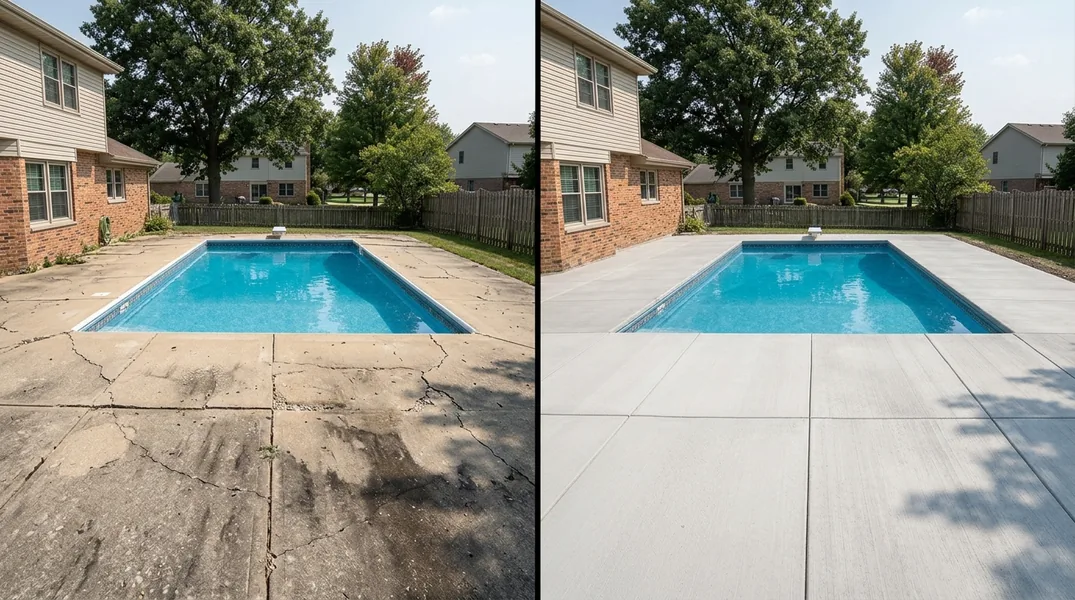
Concrete requires relatively low maintenance compared to pavers, which is one reason many homeowners prefer it. Annual sealing, typically every two to three years, is the primary maintenance task. You'll want to keep the surface clean, address small cracks promptly with concrete filler, and ensure proper drainage to prevent water pooling. Concrete Repair & Resurfacing becomes necessary when cracks widen or spalling occurs, but with preventive care, these issues can be minimized. Snow removal in winter is straightforward with concrete, though salt and de-icing chemicals can accelerate deterioration if not managed carefully.
Pavers demand more hands-on maintenance. Weeds and moss can grow between pavers, requiring regular weeding or herbicide application. The sand base needs occasional replenishment, and the pavers themselves should be sealed every two to three years to prevent staining and weathering. However, many homeowners appreciate this maintenance routine because it keeps their outdoor space looking intentional and well-cared-for. Pressure washing between pavers is easier than with concrete, and individual pavers can be cleaned or replaced without affecting neighbors. If you enjoy gardening and outdoor upkeep, paver maintenance may feel like a natural extension of your routine rather than a burden.
Aesthetic Appeal and Design Flexibility
Concrete Patios offer modern, clean aesthetics that appeal to contemporary home designs. Plain concrete provides a sleek, minimalist look, while Stamped & Decorative Concrete options allow you to mimic the appearance of pavers, brick, stone, or wood grain at a fraction of the cost. Concrete can be tinted in virtually any color, textured for slip resistance, or finished with exposed aggregate for visual interest. The design possibilities are nearly limitless, and the result is a unified, seamless surface that photographs beautifully and feels modern.
Pavers excel in creating visual warmth and traditional elegance. Available in countless colors, sizes, shapes, and materials (clay, concrete, natural stone), pavers allow you to create intricate patterns like herringbone, basket weave, or running bond. Each paver is an individual unit, so the overall effect is more textured and dynamic than a poured concrete surface. Many homeowners in Joliet prefer the classic, upscale appearance that pavers provide, especially for front entries and entertaining spaces. If your home has a traditional or cottage-style architecture, pavers often feel like the more natural choice. Conversely, if your home is modern or contemporary, concrete typically complements the design language better.
Cost Comparison: Concrete vs. Paver Installation Pricing
When comparing initial installation costs, concrete is generally the more budget-friendly option. A basic concrete driveway typically costs less per square foot than quality pavers, making it an attractive choice for homeowners working with a fixed budget. However, the final pricing depends on several factors, including site preparation, finishing options, and local labor rates. Decorative concrete options like stamping or staining will increase costs but still often remain below paver pricing. For a straightforward, no-frills driveway, concrete offers excellent value.
Pavers command a higher upfront investment, sometimes 50 to 100 percent more than basic concrete, depending on the paver material and pattern complexity. Natural stone pavers cost more than concrete pavers. However, when you factor in long-term maintenance and the ability to replace individual pavers rather than resurfacing an entire section, the lifetime cost becomes more competitive. Additionally, many real estate professionals note that paver installations appeal to luxury-minded buyers and can increase perceived home value more significantly than concrete. If you plan to stay in your home long-term, the higher initial investment may justify itself through durability, aesthetics, and potential resale value. To get an accurate comparison for your specific project, we recommend requesting a free estimate from Joliet Concrete Pros.
Climate Considerations: Why Joliet's Weather Matters
The climate in Joliet and surrounding areas significantly influences which material performs better over time. Illinois experiences cold, harsh winters with freeze-thaw cycles that can be brutal on concrete. When water seeps into concrete cracks and freezes, it expands, causing the crack to widen further. Over several winters, this cycle can create substantial damage. However, modern concrete sealers and air-entrained concrete mixes are specifically designed to withstand these conditions. When installed by experienced professionals who understand regional challenges, concrete can perform excellently even in Joliet's demanding climate.
Pavers have a natural advantage in freeze-thaw environments because each unit can shift slightly without compromising the entire system. The permeable base allows water to drain away rather than pooling on the surface, reducing the risk of ice formation and water infiltration. This makes pavers an exceptionally smart choice for homeowners in Joliet who experience significant snow and ice accumulation. The trade-off is that pavers require more diligent maintenance to keep the base stable and ensure proper drainage. Both materials can thrive in Illinois when properly installed and maintained, but your choice should reflect your climate priorities and maintenance commitment.
Looking for a professional concrete contractor in Joliet? Joliet Concrete Pros responds fast for all your concrete needs.
Get a Free QuoteOur services: Concrete Driveways · Concrete Patios · Stamped & Decorative Concrete