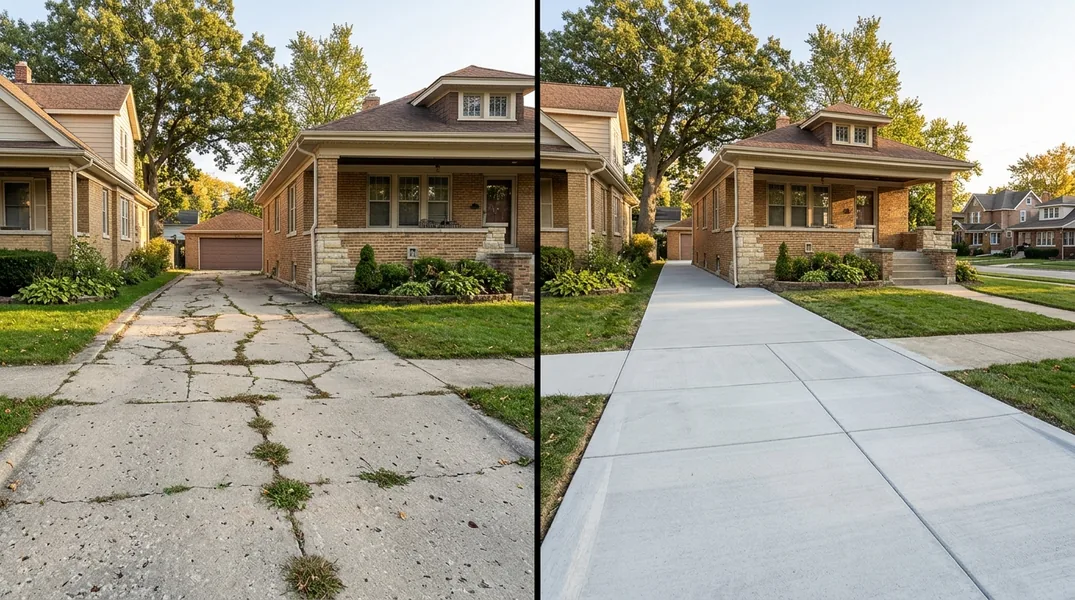
Why Timing Matters for Concrete Pouring in Illinois
If you're planning to install Concrete Driveways, Concrete Patios, or any concrete project in Joliet, timing is everything. Many homeowners don't realize that concrete doesn't simply harden the same way year-round. Temperature, humidity, and weather conditions directly impact how well your concrete cures, how strong it becomes, and how long it lasts.
Illinois experiences significant seasonal temperature swings, from frigid winters dropping well below freezing to warm summers that can exceed 85 degrees Fahrenheit. These extremes create real challenges for concrete contractors. Pour your concrete at the wrong time, and you risk cracking, weak bonding, improper curing, and premature deterioration. Get the timing right, and your investment will serve you reliably for decades. Understanding when to pour concrete Illinois is one of the smartest decisions you can make as a homeowner.
Spring: The Ideal Season for Concrete Work
Spring, typically from April through May, is widely considered the best concrete pouring season Joliet homeowners should target. During these months, temperatures in Illinois are moderate, usually ranging between 50 and 70 degrees Fahrenheit. This sweet spot allows concrete to cure evenly and at an optimal pace. The ground has also thawed from winter, making site preparation easier, and the risk of unexpected frost damage is minimal.
Spring also offers another advantage: consistent moisture levels. Unlike summer, when intense sun can cause concrete to dry too quickly and create surface cracks, spring provides gentler conditions. Rain is common in spring, but modern concrete mixes and proper site management mean a light rain won't ruin your project. Experienced Joliet concrete contractors know how to protect freshly poured concrete from heavy downpours while allowing it to cure properly. If you're considering a concrete project, spring is your window to get excellent results with minimal weather-related complications.
Summer Concrete Pouring: Proceed with Caution
Summer might seem like an obvious choice for outdoor work, and while concrete can certainly be poured during hot months, it comes with significant challenges. When temperatures soar above 80 degrees Fahrenheit, concrete sets and cures much faster than intended. This rapid curing can trap moisture inside the concrete, leading to surface cracking, scaling, and reduced strength. The intense sun also accelerates water evaporation from the concrete surface, which disrupts the chemical hydration process that makes concrete strong.
If you absolutely must pour concrete during summer in Plainfield or nearby areas, your contractor will need to take extra precautions. These include shading the concrete surface, misting it regularly, using specialized admixtures to slow curing, and potentially pouring during early morning or evening hours. These measures add time and expense to your project. For most homeowners, waiting until spring or early fall is the smarter financial and practical choice. The temporary delay pays dividends in durability and reduces the risk of costly repairs down the road.
Fall: Your Second-Best Opportunity for Concrete Work
Early fall, particularly September and early October, is your second-best window for concrete work in Illinois. Temperatures cool down to a comfortable range similar to spring, usually between 55 and 75 degrees Fahrenheit. The humidity drops, and the intense summer sun is no longer a threat to rapid evaporation and cracking. For homeowners who missed the spring season or need to complete projects before winter, fall offers an excellent alternative.
However, fall comes with a time constraint. As October progresses and November approaches, temperatures begin dropping unpredictably. Frost can arrive earlier than expected, and nighttime temperatures may dip below 50 degrees Fahrenheit. This is where cold weather concrete curing becomes a serious concern. If temperatures drop too low before your concrete has fully cured, the hydration process slows dramatically, and the concrete may not reach adequate strength. A reputable concrete contractor will monitor the forecast closely and may recommend waiting or using heated blankets to protect your concrete if temperatures threaten to drop unexpectedly.
Winter and Cold Weather Concrete Curing: Why It's Risky
Winter is generally the worst time to pour concrete in Illinois, and cold weather concrete curing presents multiple serious risks. When temperatures fall below 50 degrees Fahrenheit, concrete cures extremely slowly. Below 40 degrees, the hydration process nearly stops entirely. If temperatures drop to freezing (32 degrees or lower) before your concrete has cured sufficiently, water in the concrete mix can freeze and expand, causing internal damage and surface spalling that may not be immediately visible but will worsen over time.
That said, winter concrete work isn't impossible. Professional contractors can pour concrete in winter using heated enclosures, insulated blankets, heated water in the mix, and specialized anti-freeze admixtures. These measures significantly increase project costs and require constant monitoring. For routine projects like Concrete Driveways or Concrete Patios, winter pouring rarely makes financial sense. Unless you have an urgent need, it's best to plan your concrete project for spring or early fall and avoid the winter weather complications altogether.
Planning Your Concrete Project: When to Contact a Local Contractor
The best approach is to plan ahead. If you're thinking about Stamped & Decorative Concrete, Concrete Repair & Resurfacing, or any concrete work in Bolingbrook or Romeoville, start planning in late winter or early spring. Contact Joliet Concrete Pros at (779) 205-0153 to discuss your project timeline and get a free estimate. Our team can help you understand the best window for your specific project type and local weather patterns.
When you reach out, be prepared to discuss your project scope, desired timeline, and any budget considerations. A professional Joliet concrete contractor will factor in current weather forecasts, soil conditions, and your project's specific requirements to recommend the optimal pouring date. This consultation is invaluable and can save you thousands in repair costs by avoiding weather-related failures. Don't leave your concrete project to chance. Let the experts guide your timing, and you'll enjoy a beautiful, durable concrete surface for years to come.
Looking for a professional concrete contractor in Joliet? Joliet Concrete Pros responds fast for all your concrete needs.
Get a Free QuoteOur services: Concrete Driveways · Concrete Patios · Stamped & Decorative Concrete